The Hypersonics Bottleneck Is Manufacturing, Not Design
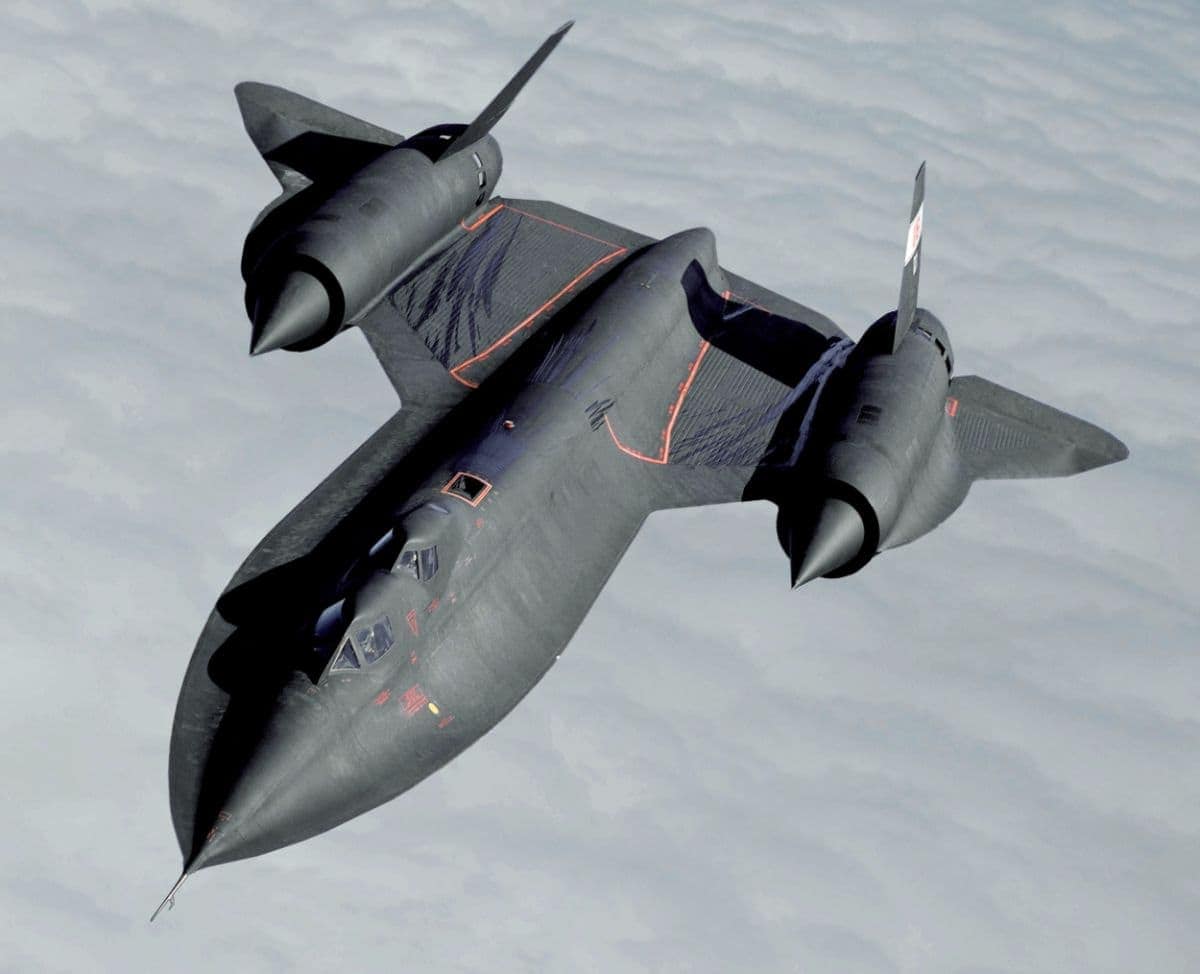
Start with a simple piece of physics: when an aircraft pushes through air, the air piles up ahead of it and gets hot, and the heating grows roughly with the square of the speed. That square is a staircase, and each step up changes what the vehicle must be made of. At Mach 2, Concorde's nose reached about 127°C. Hot enough to stretch the airframe by a couple of hundred millimetres, cool enough for aluminium. At Mach 3, the SR-71 ran hundreds of degrees hotter and had to be built from titanium, with corrugated panels designed to expand and joints that famously wept fuel on the runway until the aircraft warmed up and sealed itself. And somewhere past Mach 4 or 5, the staircase leaves metal behind altogether. The air itself becomes a blowtorch; leading edges see well over 1000°C . A hypersonic vehicle is not an aircraft that happens to get hot. It is a thermal protection system with an engine.
It is worth pausing to notice that the supersonic revival now underway sits comfortably on the lower steps. Boom Supersonic, a startup that has broken the industry's mould in the best way, flew its XB-1 demonstrator past Mach 1 last year, the first independently built civil jet ever to do so, and did it repeatedly without an audible boom reaching the ground. But notice what Boom's hardest problem turned out to be. It was not the shape of the aeroplane. It was that no established engine maker would build them an engine, so they are building their own, and their own factory to boot. Even at Mach 1.7, where aluminium and carbon fibre still apply, the gating challenge turned out to be industrial, not conceptual. Hold that thought, because it is the whole essay in miniature.
The seduction of design
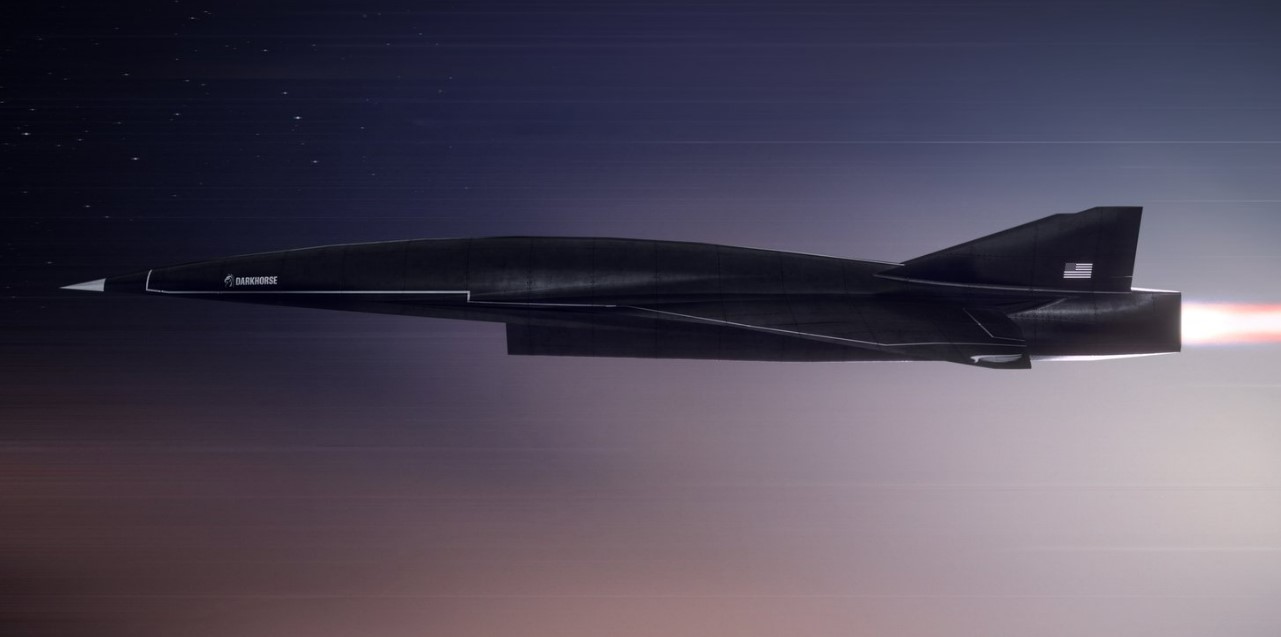
Hypersonics has a public image, and the image is a rendering: a sleek black wedge, computational fluid dynamics in false colour, a waverider surfing its own shockwave. The imagery teaches people that this is a design problem; that somewhere there is a shape yet to be discovered, and the nation that computes it first wins. But we are not short of shapes, and we have not been for a long time. The X-15 flew at Mach 6.7 in 1967, well before the moon landing. The Space Shuttle re-entered at Mach 25 134 times across thirty years. The aerodynamics textbooks were written two generations ago, before modern computing. Designs for hypersonic aircraft exist in glorious abundance; they have existed for seventy years. If design were the bottleneck, we would be flying them.
A sad proof
I was struck by the notable lack of one company at this year’s Farnborough Airshow, a British company I really admired, and it is not a comfortable story. Reaction Engines was, by wide agreement, home to one of the most brilliant propulsion concepts of the age: the SABRE engine, whose precooler could take air arriving at over a thousand degrees and chill it by that much in a fraction of a second, through a heat exchanger of thousands of kilometres of fine tubing — and the precooler was not a model; it was built, and tested, and it worked. Nearly four decades of world-class engineering. The company entered administration in late 2024 all the same. The best design in the field did not fail for want of cleverness. It failed in the long, expensive valley between a validated component and a manufactured, certified, priced product. The valley where capital runs out faster than milestones arrive. The design was never the bottleneck. Everything after the design was.
What actually gates the field
Readers of my earlier essays will recognise the shape of what lives in that valley. The materials that survive at the top of the speed staircase (carbon-carbon, ceramic matrix composites, refractory ceramics) exist, and have existed for decades. What does not exist is the marriage of material, manufacturing route, and believable cost-per-part. The process routes are measured in furnace-weeks; scrap a part at final inspection and you have lost a season, not a component. The parts are coated systems, certified as systems, inspected as systems. Every vehicle wants leading edges, panels, control surfaces and nozzles in different materials, all joined together perfectly(and the joints between dissimilar materials in a thousand-degree gradient are a discipline of grief all their own). None of this is designed on a screen. All of it is learned, slowly, at the furnace door.
The trap that makes it worse
And hypersonics adds a cruelty that even jet engines are spared. In my last essay I argued that the number gating advanced composites is cost per part at rate: what the thousandth part costs once the line is running. Here is the trap: hypersonic programmes have no thousandth part. Fleets are tiny, vehicles are sometimes expendable, and production runs are measured in dozens. The field that needs manufacturing learning most is the field structurally denied the volume that pays for it. Every part is a first article; every first article carries the whole overhead on its back. Costs stay astronomical, so fleets stay tiny, so costs stay astronomical. The staircase is guarded by a circle.
The semiconductor lesson
Now overlay the part of this that has governments' attention: sovereignty. The world recently ran a very expensive natural experiment with semiconductors and learned that designing chips and being able to make chips are different national capabilities, and that the second one is the strategic asset; painful to lose and near-impossible to rebuild quickly. High-temperature materials are running the same experiment now. The fibres at the heart of the best ceramic composites come from a handful of plants worldwide; export rules mean the relevant materials and machines cannot simply be bought; and the tacit knowledge lives in people and production lines, not in papers. A nation can hold every design in the field and still be unable to build the vehicle. Manufacturing capability is not the support act to the technology. It is the technology.
What would actually open the bottleneck
So the way through is not a better shaped wedge. It is anything that attacks the arithmetic of manufacture: processing routes borrowed from the polymer industry's cheap, fast, automatable playbook; material systems that cure in hours rather than infiltrate over weeks; multilayer structures that reserve the exotic, slow, precious ceramics for the stagnation line and build the acreage from something a factory can love: structures moulded into one another rather than fastened, so the joints stop being the tax collector. Readers of this series will know I believe inorganic matrix composites are a key that fits this lock. But the argument stands without them: whoever makes high-temperature structure cheap to manufacture at small volumes holds the field.
The shapes are waiting. They have been waiting since before we went to the moon, filed neatly in the textbooks, hovering at the top of the staircase. The race that matters is not to design the vehicle of the future. It is to become the kind of country, and the kind of industry, that can afford to build it.